How Handi vets its service professionals.
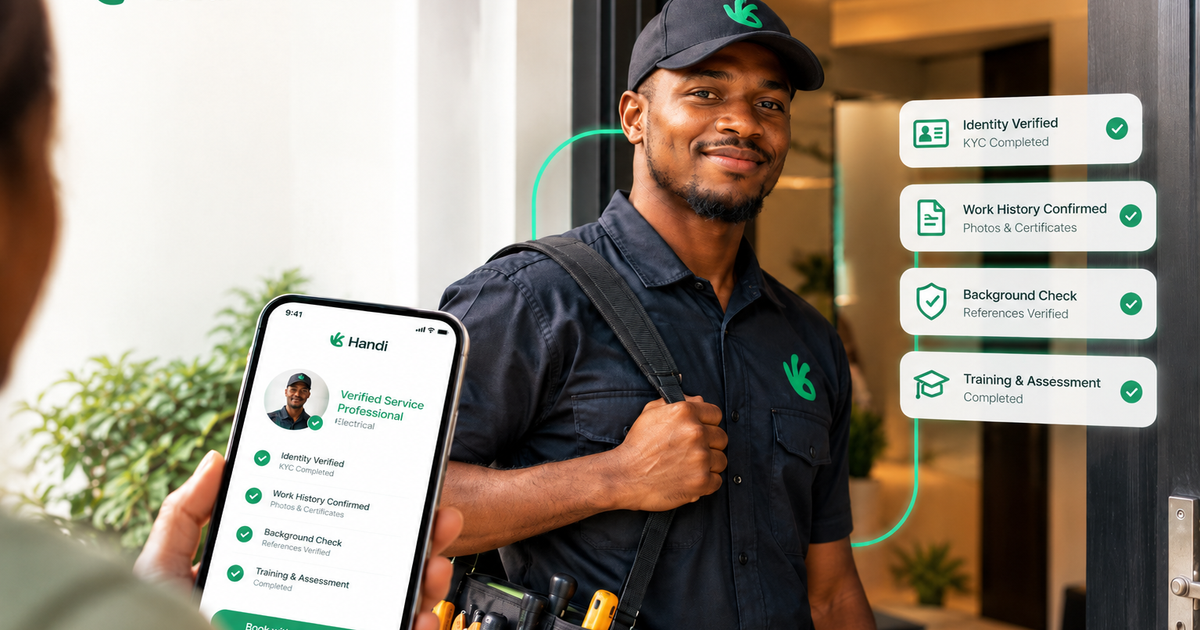
Before a service professional can start taking jobs on HANDI, they go through a process that includes identity verification, work and training checks, onboarding, and assessment. Here’s what that process looks like and why we take it seriously.
Before they serve you: how Handi vets its service professionals
When you invite someone into your home, you are trusting them with more than a repair or a cleaning job. You are giving them access to your space, your belongings and part of your day. Naturally, you want to know who is coming, whether they can do the work and how they will behave when they arrive. That is why service professionals do not simply create an account on Handi and immediately start accepting jobs. Before they can take on work, they go through identity verification, checks on previous work or training, onboarding and an assessment. References may also be contacted where appropriate. The aim is to give you more confidence in the person you are booking. Here is what that process involves.
1. We start with identity verification
Service professionals sign up on the Handi app and complete KYC, which stands for Know Your Customer. This involves providing a valid means of identification as part of the onboarding process. It gives us a starting point for establishing who is behind the account. But knowing someone’s identity and understanding their ability to do a job are two different things. That is why the process continues beyond identification.
2. We ask for evidence of previous work or training
After the initial verification, Handi contacts the service professional by SMS or WhatsApp to request information about their work and experience. This can include photographs of completed jobs, certificates of service or relevant training certificates. These materials help us understand the type of work they have done and the training they have received.
For someone offering painting services, photographs can show examples of their finishes. For other professionals, training documents can provide more context about their experience. These are pieces of evidence we review as part of the wider process, rather than relying only on what someone says they can do.
3. We introduce them to the standards expected at Handi
Technical ability matters, but so does how a professional treats the customer. An electrician may know how to fix a fault but communicate poorly. A cleaner may do a thorough job but handle a customer’s belongings carelessly. The work itself is only part of the experience.
Service professionals therefore go through an in-person onboarding process before joining Handi’s provider network. They receive a manual covering professional customer relationships, communication and the standards expected when dealing with customers. How you treat a customer is part of the service. We want professionals to understand that from the beginning.
4. We explain our values, rules and expectations
Alongside the in-person onboarding and manual, service professionals receive videos explaining Handi’s values, rules, dos and don’ts. These materials help make our expectations clear before someone begins taking jobs. Joining Handi means more than gaining access to customers; it means understanding the responsibilities that come with working in their homes and serving them professionally.
5. They complete an assessment
After reviewing the onboarding materials, service professionals take an assessment. They must achieve the required score before they can move forward. The assessment checks their understanding of the information, values and standards covered during onboarding. It is a check on what they have learned from that process; it should not be confused with a practical trade examination. Creating an account is therefore only the beginning. There are requirements to meet before a professional can start accepting jobs.
6. References may provide additional context
Where appropriate, references and referrals also form part of the vetting process. A service professional may provide people who can vouch for them. Handi can contact those people, ask questions and make further enquiries about the information supplied. A referral alone does not tell us everything about a person. However, it can provide useful context alongside identification, work evidence and onboarding.
What does “vetted” mean at Handi?
A vetted service professional has gone through Handi’s required checks, onboarding and assessment process before being accepted into the provider network. This includes providing valid identification, sharing evidence of previous work or relevant training, learning the platform’s standards and achieving the required assessment score. References may also be contacted where appropriate.
Vetting helps us make a more informed decision about who joins the platform. It is not a guarantee that every job will go perfectly or that every possible concern can be eliminated. It means there is a process beyond signing up and claiming to have a skill.
What happens after a professional is accepted?
The expectations introduced during onboarding still apply when a professional begins taking jobs. Good communication, professional conduct and care for the customer’s space remain part of the service expected.
As a customer, you also have a role in making the booking clear. Explain what needs to be done, share useful photographs where possible, and confirm the scope and timing with the professional before work begins. Review the available ratings and information about the person you are considering. If you have a question or concern about your booking, you can contact Handi’s support team for assistance.
Why we take vetting seriously
Many of us have found an artisan through a neighbour, a friend or a WhatsApp group. Those recommendations can be useful. But knowing that someone worked for a person you know does not always answer your own questions about their experience, communication or conduct. When you need something fixed, you already have a problem to deal with. Finding help should not add another layer of uncertainty.
Our vetting process is part of the work we do to make that experience easier. We ask who a professional is, what experience they can show and whether they understand the standards expected of them before they begin serving customers. Whether you need plumbing, cleaning, electrical repairs or another service, you can explore the services available through Handi and take the next step towards getting the help you need.
Frequently asked questions
Can someone start accepting jobs immediately after signing up?
No. Creating an account is the first step. Service professionals must complete the required verification, onboarding and assessment process before they can start accepting jobs.
Does Handi check previous work?
Handi requests evidence that can include photographs of completed jobs, certificates of service or relevant training certificates. These help us understand a professional’s work and experience.
Are references contacted for every professional?
References and referrals may be contacted where appropriate. They are an additional part of the process, rather than a step described as compulsory for every applicant.
Does vetting guarantee a perfect service?
No vetting process can guarantee every outcome. The purpose is to establish who a professional is, review evidence of their experience and make sure they understand Handi’s expectations before taking jobs.
How do I book a service through Handi?
You can explore available services on the Handi website. When you’re ready to book, download Handi for iPhone from the App Store or for Android from the Play Store. Once you’ve signed up, describe the job you need done, compare quotes and book your chosen professional.